Toilet guide
Cassette Toilets Explained
A practical guide to how motorhome cassette toilets work, how to empty and clean them properly, and what owners should know before heading off on tour.
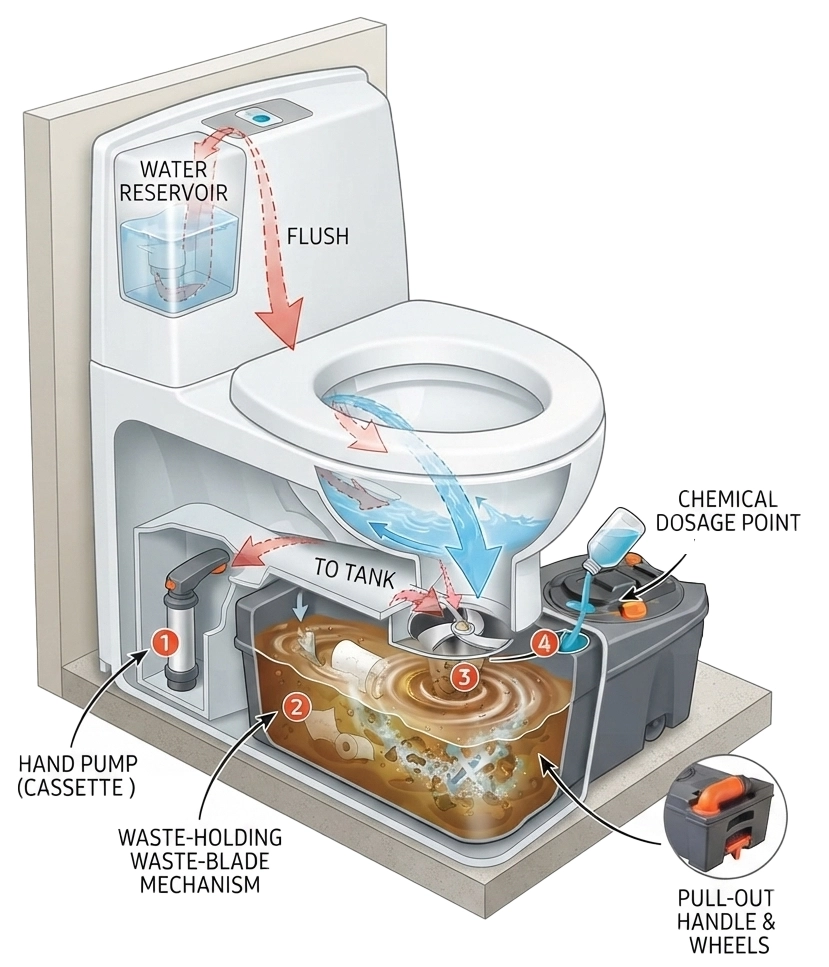
How does a cassette toilet work?
Modern cassette toilets are simple, reliable and much easier to live with than many first-time owners expect. Once you understand the bowl, blade and removable waste tank, it quickly becomes a normal part of motorhome life.
The toilet bowl sits above a sealed cassette that collects waste, flush water and chemicals. When you open the blade and flush, the contents drop into the cassette below, where odour control and breakdown begin.
Most concerns disappear after a few trips. With the right routine for emptying, cleaning and seal care, a cassette toilet is straightforward to use and does not usually smell in normal use.
Essentials
What matters most with cassette toilets
Toilet chemicals
- Blue chemicals usually target odours and waste breakdown
- Green options are often more eco-friendly – Some site insist on this type
- Pink products are commonly used in the flush tank
Cleaning safely
- Avoid bleach and harsh household cleaners
- Use warm water, mild washing-up liquid
- Dedicated motorhome toilet cleaner to protect seals and plastic parts.
Seal care
- Keep the blade seal clean and lubricated with an approved maintenance spray to reduce sticking, leaks and premature wear.
SOG systems
- A SOG system uses ventilation and negative pressure to draw smells outside, reducing reliance on chemicals and improving airflow inside the cassette.
Toilet paper
- Motorhome toilet paper breaks down more quickly, though some owners use household paper that passes a simple water-breakdown test.
- Test, fill a clear jar three-quarters full with water and drop in two sheets of toilet paper. Stand for one minute, shake vigorously for 10 seconds. If the paper completely disintegrates into tiny shreds it’s safe otherwise it will clog your system.
Emptying correctly
- Always empty the cassette at approved motorhome service points, campsite disposal facilities or designated waste stations.
- As a guide – an average motorhome toilet would typically last for about 2 days before it needs to be emptied
- Some campsites will allow you to empty and fill water, but may have a small charge – don’t assume it’s free and never empty waste down a normal drain.
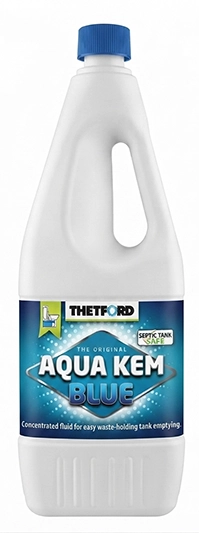
Traditional Blue Chemicals
- Pros: Fast-acting, highly potent mask and bacterial killer; performs reliably during high summer temperatures.
- Cons: Harsh on the environment, not allowed at all campsites, and incompatible with standard septic tanks.
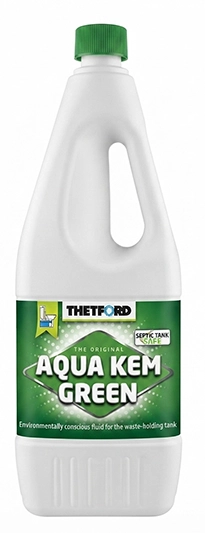
Organic/Biological Fluids
- Pros: Eco-friendly, safe for septic/green systems, welcomed at all campsites, and often features a pleasant natural scent (like eucalyptus or pine).
- Cons: Can struggle to suppress intense odours if the cassette is left too long in very hot weather compared to heavy-duty blue chemicals.
Key questions
Ask yourself these three questions
1. How often will you empty it?
Emptying frequency depends on cassette size, how many people are travelling and how often you use campsite facilities instead.
For many couples, a cassette may last two or three days, but families or full-time use can shorten that considerably.
Knowing your likely routine helps you plan stops, service points and whether a spare cassette could be useful.
2. Are you using the right products?
The right chemicals, enough flush water and suitable toilet paper all help the cassette work properly and reduce smells.
Using harsh cleaners or unsuitable paper can create avoidable problems with seals, blades and waste breakdown.
A simple, consistent routine is usually better than overcomplicating the system.
3. Do you know where to empty it?
Approved campsite disposal points, aires and motorhome service areas are the right places to empty a cassette toilet.
Planning disposal points before a trip makes touring easier and helps you avoid last-minute stress or poor disposal choices.
Common questions
Frequently asked questions
Can I use normal toilet paper?
Sometimes, yes. If it breaks down quickly in water, it may be suitable, but dedicated motorhome toilet paper removes one common cause of emptying problems. ( Test your paper – Fill a clear jar three-quarters full with water and drop in two sheets of toilet paper. Stand for one minute, shake vigorously for 10 seconds. If the paper completely disintegrates into tiny shreds it’s safe otherwise it will clog your system.)
Can I clean the toilet with bleach?
No. Bleach can damage rubber seals, plastic components, toilet blades and internal mechanisms. Use products designed for cassette toilets instead.
Can I empty it down a normal drain?
Generally no. Use only approved disposal points to avoid plumbing issues, environmental harm and possible local penalties.
Do cassette toilets smell?
A properly maintained cassette toilet should not smell much in normal use. The key is correct chemicals, enough flush water, regular emptying and good seal care. (As a general guide, try to empty it every couple of days at max.)
Is a SOG system worth it?
For frequent travellers and full-time users, often yes. It can reduce smells and lower chemical use by venting the cassette effectively.
Final thoughts
Keep it simple and stay consistent
Cassette toilets are one of those motorhome systems that seem daunting at first but quickly become routine.
Use the right products, empty the cassette at proper disposal points and keep the seals clean, and the whole system becomes easy to manage.
Once you have your routine sorted, you can focus less on the toilet itself and more on enjoying the trip.