
Power guide
Motorhome EHU Basics
Learn the essentials of electric hook-up setup for Roller Team owners, from plug types and campsite connections to practical safety checks for reliable touring across the UK and Europe.
At a glance
What Roller Team motorhome owners need to know about EHU
A practical overview of the main motorhome EHU topics before you plug in at home, on aires, or on campsites across the UK and Europe in your Roller Team motorhome.
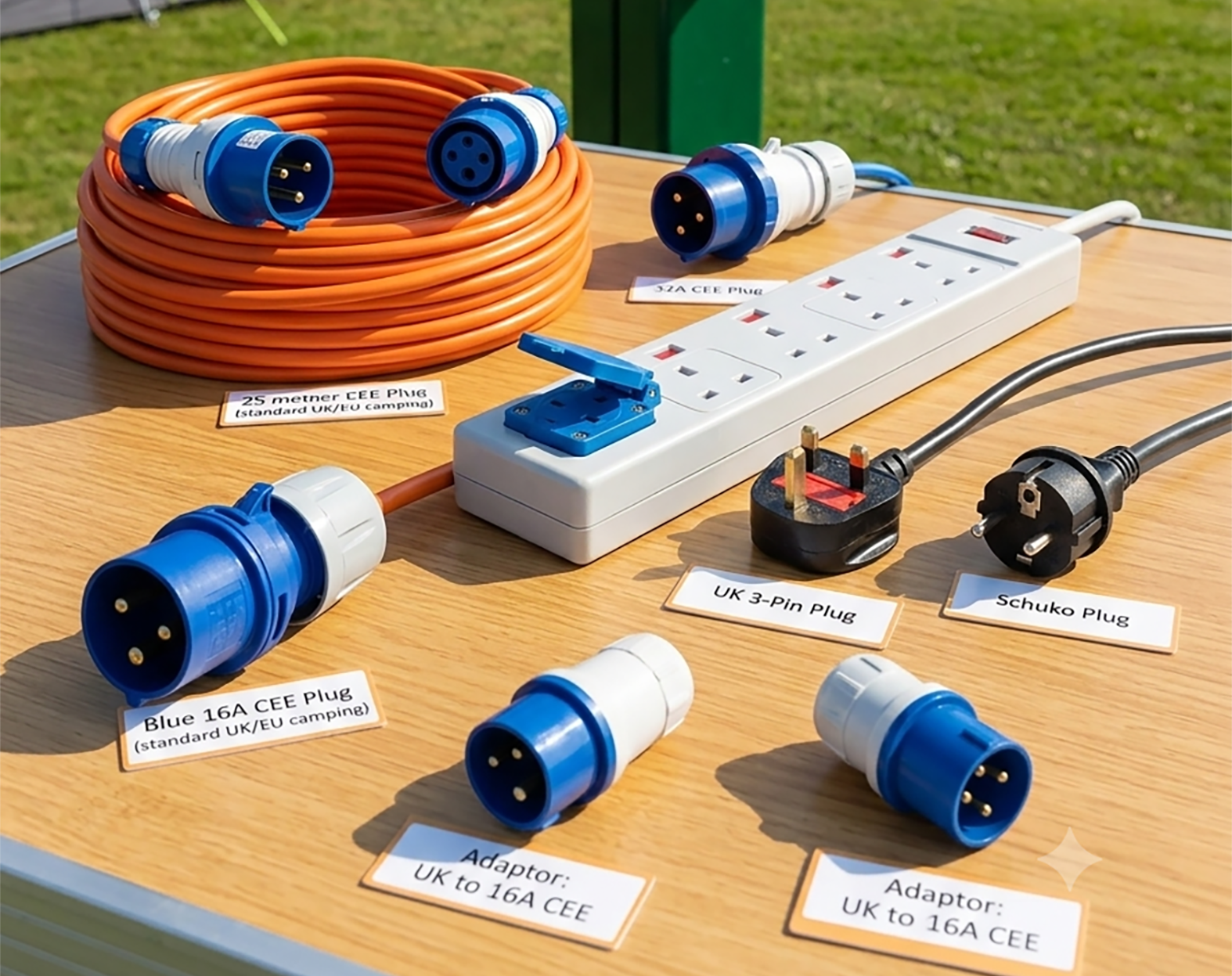
Common motorhome EHU types for Roller Team owners
Most motorhome EHU setups use a blue 230V CEE hookup lead, but site bollards, extension lengths, and onboard protection can vary. Always confirm your Roller Team motorhome inlet, cable rating, and breaker setup before travel.
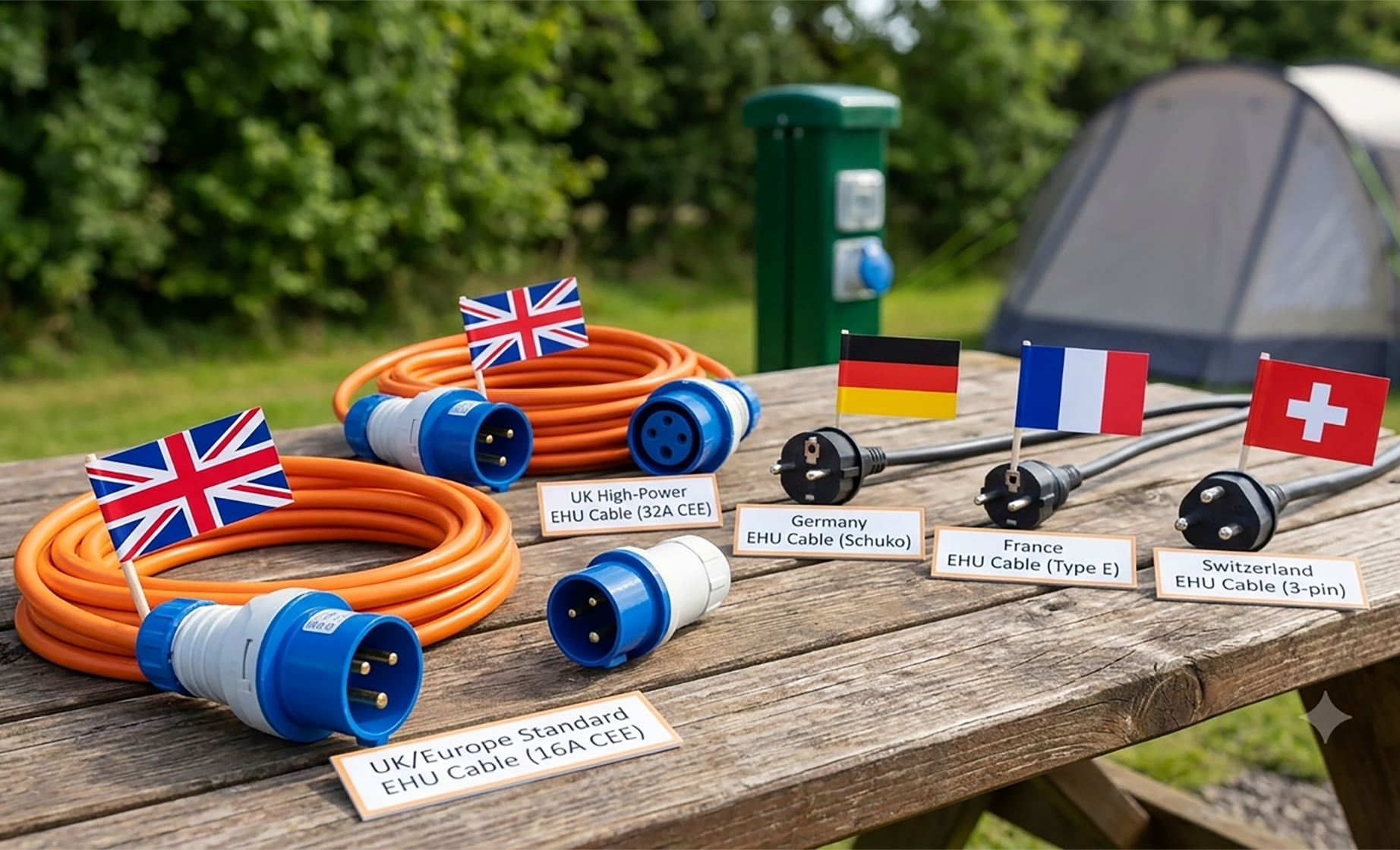
Motorhome EHU country differences for Roller Team touring
Motorhome EHU rules can vary by country, with different socket styles, polarity arrangements, and campsite power limits. Carry the right adapters and check the site supply before connecting appliances in your Roller Team motorhome.
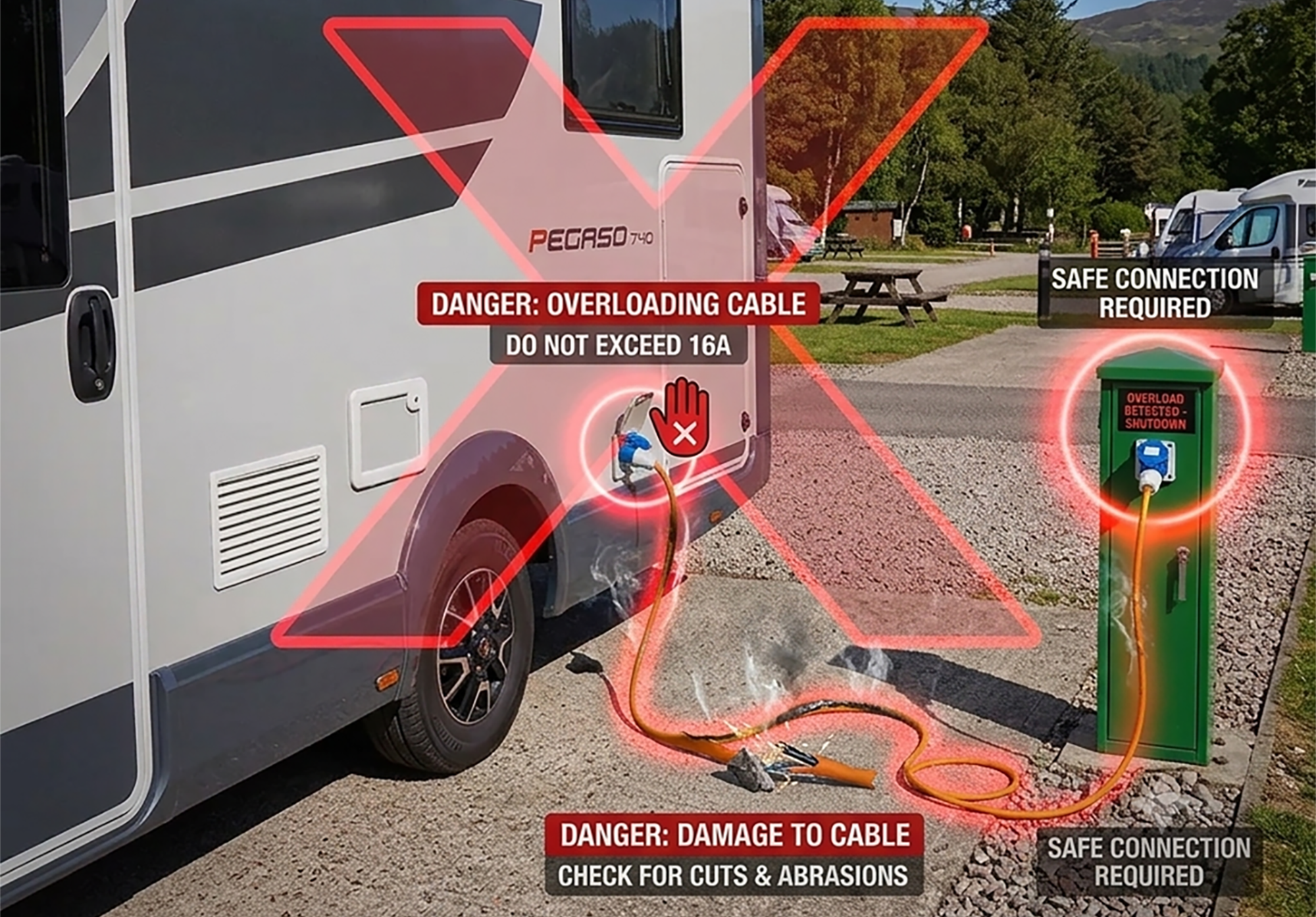
Motorhome EHU safety for Roller Team owners
Never leave a high-load motorhome EHU cable tightly coiled while in use, avoid damaged leads, and do not overload a low-amp pitch with heaters, kettles, and chargers running together in your Roller Team motorhome.
Practical guide
Using motorhome EHU safely in your Roller Team
Regular safety checks are critical for any motorhome EHU setup. Physical damage from being run over or yanked, along with wear from the weather, can lead to far more than just a nuisance power outage and may create a serious fire hazard for your Roller Team motorhome.
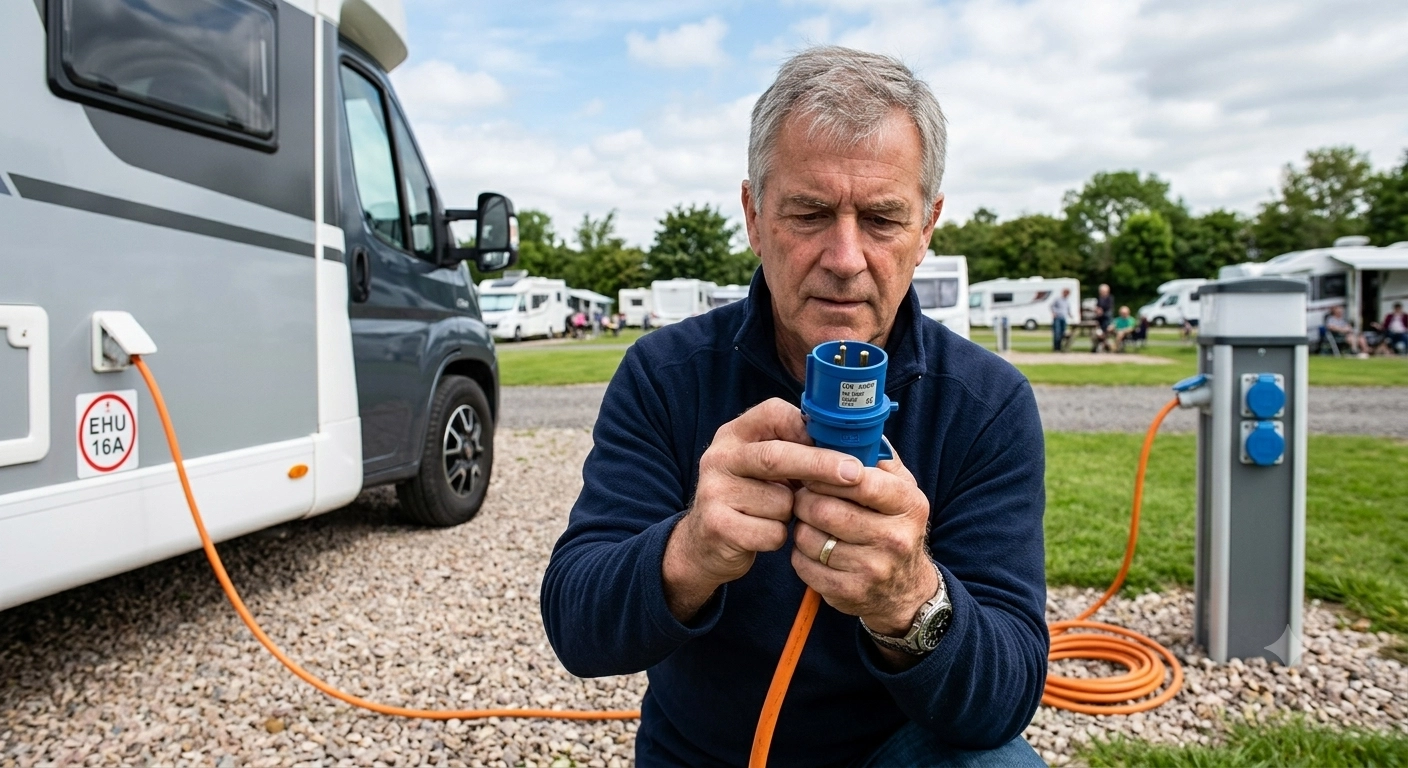
Roller Team motorhome EHU checklist
- Fully unwind your extension cable before use.
- Use a lead and any adapter with the correct amperage rating.
- Inspect plugs, joins, and cable insulation before connecting.
- Keep connectors dry, ventilated, and off standing water.
- Avoid overloading low-amp supplies with multiple high-draw appliances.
- Check local socket type, voltage, and polarity before travelling abroad.
Inspection Items
Cable Condition
Inspect the full length of the cable for:
- Cuts, splits or abrasions to the outer sheath.
- Crushing, flattening or impact damage.
- Exposed inner insulation or conductors.
- Signs of overheating, melting or scorching.
- Excessive twisting, kinking or stretching.
- Contamination from oil, chemicals or fuel.
- UV degradation or deterioration due to age.
Acceptable Standard:
The cable should be clean, flexible and free from any damage that could compromise its insulation or mechanical strength.
Site Plug (Male Plug)
Inspect for:
- Cracked or damaged casing.
- Secure cable gland.
- Straight, undamaged pins.
- No signs of burning or overheating.
- No corrosion on pins.
- Secure internal wiring (where inspection is possible).
- Correct operation of the locking collar.
- Rubber seals in good condition.
Acceptable Standard:
The plug should be mechanically sound with clean, undamaged pins and secure cable retention.
Vehicle Connector (Female Socket)
Inspect for:
- Cracked or damaged casing.
- Secure cable gland.
- Clean electrical contacts.
- No corrosion.
- No evidence of overheating.
- Locking mechanism functioning correctly.
- Weather seals intact.
- Connector free from dirt and moisture.
Acceptable Standard:
The connector should lock securely onto the vehicle inlet and provide adequate protection against water ingress.
Cable Identification
Confirm:
- Cable is the correct orange colour for outdoor use.
- Rated for 230V, 16A operation.
- Manufactured using 3-core flexible cable (typically 2.5 mm² conductors).
- Suitable for outdoor environments.
Operational Checks
Verify:
- Cable can be fully uncoiled before use.
- Connectors fit securely without excessive force.
- No strain is placed on either end when connected.
- Cable routing will not create a trip hazard or risk of vehicle damage.
Storage
Inspect storage condition:
- Cable stored dry.
- No tight bends.
- No heavy objects stored on the cable.
- Connectors protected from dirt and moisture.
- Cable coiled correctly to prevent internal damage.
Inspection Outcome
The EHU cable should only remain in service if:
- No damage affecting insulation is present.
- Connectors are mechanically secure.
- Electrical contacts are clean and free from corrosion.
- There is no evidence of overheating.
- The cable remains suitable for safe outdoor use.
Motorhome EHU (Electric Hook-Up) Questions & Answers
Do I need to unwind my electric hook-up cable?
Yes – always fully unwind your EHU cable before using it.
When a cable remains coiled, it can build up heat as electricity passes through it. This heat cannot escape easily, increasing the risk of overheating and, in extreme cases, damaging the cable or causing a fire.
Always:
- Fully unwind the cable.
- Inspect it for damage before use.
- Keep plugs and sockets off the ground where possible.
- Use a quality 16A CEE hook-up cable designed for caravans and motorhomes.
What length hook-up cable do I need?
For most UK campsites, 25 metres is the standard length and will cover almost every pitch.
If you regularly travel in Europe, carrying two 25-metre cables (50 metres total) is often more practical than one very long cable. It gives you greater flexibility and avoids having unnecessary cable lying around when it’s not needed.
Can I join two hook-up cables together?
Yes, but only if absolutely necessary.
Joining two cables is generally safe when using proper caravan or motorhome CEE connectors, but there are a few important points to remember:
- Use good quality waterproof connectors.
- Ensure both cables are rated for 16 amps.
- Fully unwind both cables.
- Keep the connection off the ground and protected from standing water.
- Check the connection regularly during use.
Some campsites do not allow joined cables, considering them a potential safety risk, so always check the site’s rules.
Remember that very long cable runs can also cause a small voltage drop, particularly if you’re running high-powered appliances.
Can I leave my motorhome plugged in all the time?
Usually yes—but it depends on your motorhome’s charging system.
Modern motorhomes generally have intelligent battery chargers that switch to a maintenance or float charge once the batteries are full. These are designed to be left connected for extended periods.
Advantages:
- Keeps leisure batteries charged.
- Keeps the motorhome ready to use.
- Allows appliances to operate without draining the batteries.
Things to consider:
- Older chargers may continuously charge the batteries, shortening their life.
- Batteries still benefit from occasional use and cycling.
- Leaving appliances switched on unnecessarily wastes electricity.
- As with any electrical installation, there is always a small fire risk, although this is very low if everything is maintained correctly.
If you’re storing the motorhome for several months, check your manufacturer’s recommendations.
Do I need a special adapter when travelling outside the UK?
Sometimes.
Many European campsites now use the same 16A blue CEE socket as the UK, so often no adapter is needed.
However, some countries and smaller sites still use domestic sockets or different connectors, so it’s worth carrying a selection of adapters.
Things to check include:
- Plug type.
- Voltage (normally 230V across Europe).
- Current rating.
- Weatherproof connections.
What about reverse polarity?
Occasionally you’ll find a campsite where the live and neutral wires are reversed (known as reverse polarity).
Most modern motorhome appliances will continue to work safely, but many owners carry a simple polarity tester to check the supply.
If reverse polarity is detected, a polarity-reversing adapter can be used if required.
What happens if the electric supply trips?
If your hook-up suddenly loses power, don’t panic. Work through these simple checks:
- 1. Switch everything off
Disconnect the hook-up safely before investigating. - 2. Check for overload
Running several high-power appliances together (kettle, microwave, electric heating and water heater) may exceed the campsite’s supply. - 3. Check your appliances
A faulty appliance can trip the supply. Disconnect everything and reconnect items one at a time. - 4. Check your hook-up cable
Look for:
- Damaged insulation
- Burn marks
- Loose plugs
- Water ingress
- 5. Reset the RCD or circuit breaker
If everything appears normal, reset your motorhome’s RCD or breaker. - 6. Check the campsite bollard
Sometimes the campsite’s breaker has tripped rather than your own system. Contact the site staff if necessary. - 7. Still no power?
If the supply continues to trip, stop using the hook-up and have the motorhome inspected by a qualified technician.
Is it safe to leave my cable lying on the ground?
Yes, but try to:
- Avoid creating a trip hazard.
- Keep plugs and sockets out of puddles.
- Avoid sharp edges or places where vehicles may drive over the cable.
- Coil any unused cable loosely rather than leaving large loops across the pitch.
What size electrical supply will I get on a campsite?
Not every campsite supplies the same amount of power.
| Supply | Power |
|---|---|
| 6 Amps | 1.4 kW |
| 10 Amps | 2.3 kW |
| 16 Amps | 3.7 kW |
If you’re on a 6A supply, running the kettle and electric heating together will probably trip the supply.
Can I leave my motorhome plugged in all the time?
Usually yes—but it depends on your motorhome’s charging system.
Modern motorhomes generally have intelligent battery chargers that switch to a maintenance or float charge once the batteries are full. These are designed to be left connected for extended periods.
Advantages:
- Keeps leisure batteries charged.
- Keeps the motorhome ready to use.
- Allows appliances to operate without draining the batteries.
Things to consider:
- Older chargers may continuously charge the batteries, shortening their life.
- Batteries still benefit from occasional use and cycling.
- Leaving appliances switched on unnecessarily wastes electricity.
- As with any electrical installation, there is always a small fire risk, although this is very low if everything is maintained correctly.
If you’re storing the motorhome for several months, check your manufacturer’s recommendations.
Do I need a special adapter when travelling outside the UK?
Sometimes.
Many European campsites now use the same 16A blue CEE socket as the UK, so often no adapter is needed.
However, some countries and smaller sites still use domestic sockets or different connectors, so it’s worth carrying a selection of adapters.
Things to check include:
- Plug type.
- Voltage (normally 230V across Europe).
- Current rating.
- Weatherproof connections.
What about reverse polarity?
Occasionally you’ll find a campsite where the live and neutral wires are reversed (known as reverse polarity).
Most modern motorhome appliances will continue to work safely, but many owners carry a simple polarity tester to check the supply.
If reverse polarity is detected, a polarity-reversing adapter can be used if required.
What happens if the electric supply trips?
If your hook-up suddenly loses power, don’t panic. Work through these simple checks:
- 1. Switch everything off
Disconnect the hook-up safely before investigating. - 2. Check for overload
Running several high-power appliances together (kettle, microwave, electric heating and water heater) may exceed the campsite’s supply. - 3. Check your appliances
A faulty appliance can trip the supply. Disconnect everything and reconnect items one at a time. - 4. Check your hook-up cable
Look for:
- Damaged insulation
- Burn marks
- Loose plugs
- Water ingress
- 5. Reset the RCD or circuit breaker
If everything appears normal, reset your motorhome’s RCD or breaker. - 6. Check the campsite bollard
Sometimes the campsite’s breaker has tripped rather than your own system. Contact the site staff if necessary. - 7. Still no power?
If the supply continues to trip, stop using the hook-up and have the motorhome inspected by a qualified technician.
Reference
Motorhome EHU socket types and Roller Team touring notes
Across Europe you will increasingly find standard blue CEE sockets on campsites, but local variations still exist. Before departure, confirm what your destination uses and carry only safe, suitable adapters for your Roller Team motorhome route.
- UK touring commonly uses blue CEE hook-up on site.
- Normally up to 16amp, but often 6amp – worth asking the site manager to avoid tripping it
- With the increase in electricity cost it is worth checking that your fees include the electricity – some now have introduced meters
- Continental sites may use CEE, Schuko, or local variants depending on the location.
- Check polarity where relevant and use a suitable checker if you rely on one.
- Inspect adapters regularly and replace worn or damaged items.
- 20–25m hook-up lead
- Switch off the bollard before connecting or disconnecting
- Keep connectors off the ground
- Carry a spare adapter
Common Countries Standard Sockets & Current
This visual guide shows which countries use which socket types, making it easier to plan the right adapters before your trip.
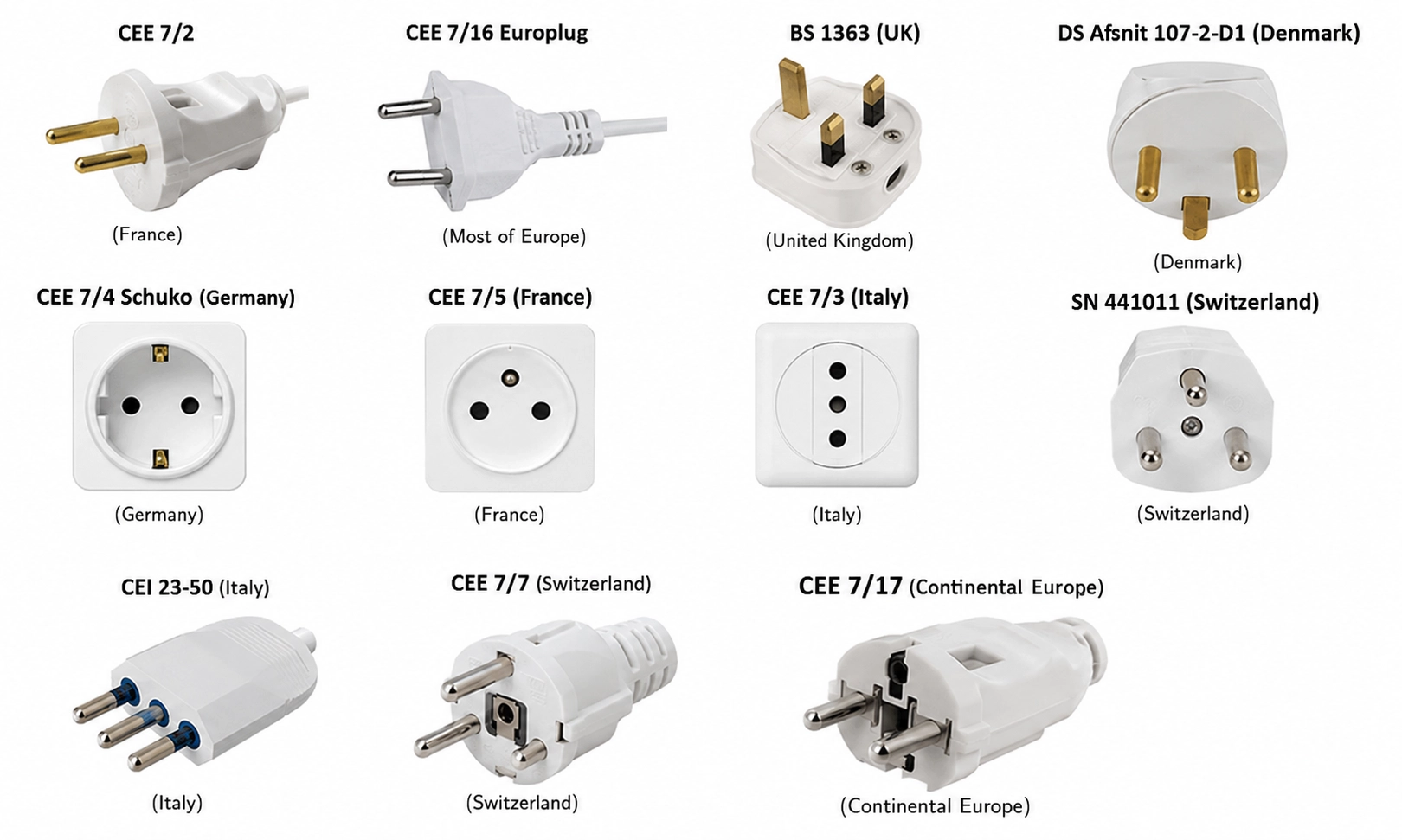
It is increasingly common for sites outside the UK to use the standard blue CEE socket, but not every site follows the same motorhome EHU setup. Polarity can also vary, so many Roller Team motorhome owners carry a polarity checker or converter lead for extra peace of mind.