Tech Guide
Motorhome Cleaning
Keep your Roller Team motorhome looking its best while protecting paintwork, seals, decals, windows, and roof components with safe, regular cleaning routines.
Exterior
Safe exterior cleaning steps
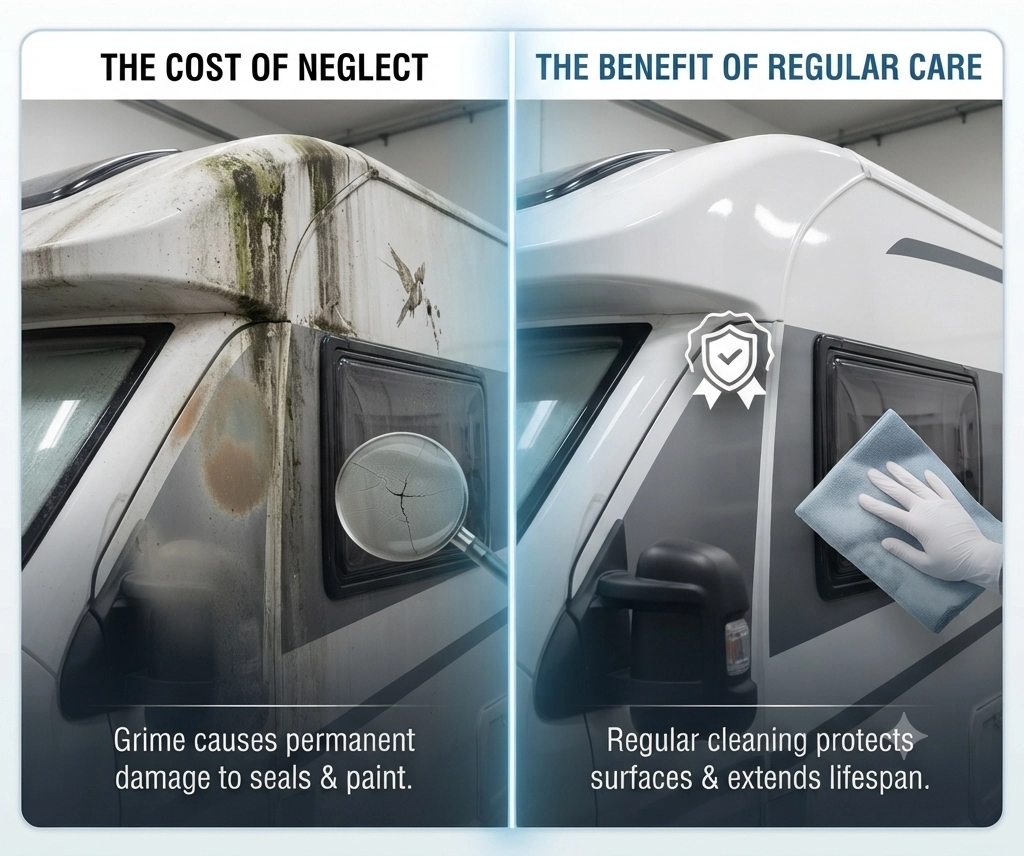
Start with a full rinse to remove loose dirt. Use a dedicated motorhome or caravan shampoo rather than harsh household cleaners. Work from the roof down, use soft brushes or microfiber mitts, and rinse frequently to avoid dragging grit across the bodywork.
Roof first
The roof often collects the heaviest dirt, leaves, and black streak residue. Clean it carefully and only if you can do so safely with proper access.
Sidewalls and decals
Use gentle products on painted panels, graphics, and trims. Avoid aggressive chemicals and abrasive pads that can dull finishes or lift decals.
Windows and acrylics
Use cleaners suitable for acrylic windows where fitted. Standard glass products can damage some plastics and leave hazing over time.
Rinse and dry
Finish with a thorough rinse and dry with soft cloths to reduce water spotting and streaking, especially in warm weather.
Checklist
What to check while cleaning
Tyres
Look for cracking, uneven wear, and correct pressures before travel.
Seals
Inspect around windows, rooflights, lockers, and doors for gaps or deterioration.
Awnings
Brush away debris and make sure fabric is fully dry before storing.
Vents
Keep fridge and heater vents clear of dirt, leaves, and obstructions.
Lights
Clean lenses and check for cracks, moisture, and proper operation.
Underside
Check for mud buildup, corrosion, or loose trim after wet-weather trips.
Inside
Do not forget the interior
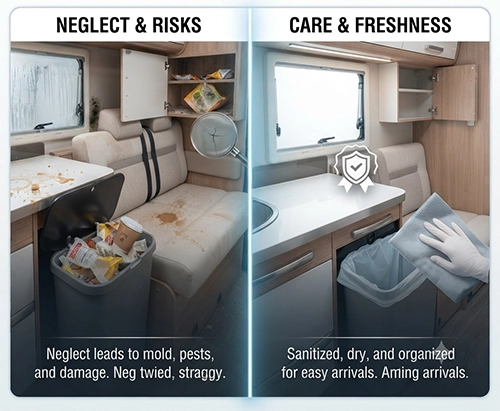
Interior cleaning matters just as much as the outside. Wipe down kitchen surfaces, empty and sanitize bins, vacuum upholstery, clean washroom areas, and make sure the fridge, cupboards, and soft furnishings are dry and fresh before storage.
If your motorhome is being parked up for a while, remove food, leave ventilation where appropriate, and deal with any damp or condensation risks early. A clean interior makes every trip feel easier from the moment you arrive.
Clean the roof safely
Roof cleaning needs a slower, more deliberate approach than washing the sides. Before climbing, confirm the roof is rated to take your weight, choose a stable ladder, and plan every movement so you protect both yourself and the roof structure.
Step by step
- Prepare the area first. Check for overhead cables, branches, uneven ground, and gusty conditions before the ladder goes up.
- Use a suitable ladder that is tall enough for a controlled transition onto the roof. Set it on firm ground and secure it so it cannot shift.
- Check the roof rating and manufacturer guidance before putting any weight on top. If you are unsure, do not climb up.
- Wear clean non-slip shoes and place 50mm high-density kneeling pads on the roof to spread weight and reduce point loading.
- Keep three points of contact while climbing. When stepping onto the roof, move carefully, kneel immediately, and settle onto the pads before cleaning.
- Move slowly from pad to pad and avoid sudden twists, long reaches, or standing upright near the edges.
- Stay clear of skylights, vents, solar panel mounts, roof penetrations, and any unsupported or visibly soft areas.
- Use roof-safe cleaning products, soft tools, and light pressure. Work methodically and keep away from the perimeter whenever possible.
Safety notes
- Do not climb in strong wind, rain, or poor light.
- Watch for soft spots, damaged sealant, and fragile roof penetrations.
- Protect roof edges from tools, buckles, and hose drag.
- Make sure brushes, shampoos, and cleaners are compatible with the roof material.
- Wear gloves and eye protection when using cleaning products.
Stop and check before you climb
Before you climb
- Check weather and wind.
- Inspect the ladder and secure it.
- Confirm roof rating and safe access.
- Use clean non-slip shoes and kneeling pads.
On the roof
- Keep three points of contact.
- Kneel as soon as you transition on.
- Move slowly pad to pad.
- Avoid edges, skylights, vents, and mounts.
Key warnings
- Never trust soft or unsupported areas.
- Keep tools and hoses from damaging edges.
- Use only roof-compatible products.
- Wear gloves and eye protection.
Final Thoughts
Clean regularly and travel with confidence
A careful cleaning routine helps protect your motorhome, improves comfort, and gives you a better chance of spotting issues before they become expensive problems. Explore more practical guides or join the community for owner-focused advice.