Weight Guide
Motorhomes Over 3.5 Tonnes
A practical guide to whether upgrading above 3.5 tonnes is the right move for your Roller Team motorhome, with the key trade-offs around payload, licensing, running costs, and touring flexibility.
Overview
Is an uprate worth it?
For many Roller Team owners, the 3.5 tonne limit is the line that shapes how the motorhome is used. It affects what you can carry, who can drive, where you can travel, and how relaxed you feel when loading up for a trip.
Moving above 3.5 tonnes can bring valuable extra payload and greater day-to-day practicality, especially for larger coachbuilt models, longer tours, bikes, extra passengers, and heavier accessories. But it also introduces trade-offs around licence rules, tolls, speed limits, and ongoing costs.
This guide helps you think through the decision clearly so you can judge whether staying at 3.5 tonnes or upgrading above it is the better fit for your style of motorhoming.
Why owners uprate
The main reasons to go above 3.5 tonnes
More payload
Extra weight allowance can make a major difference if you travel with passengers, bikes, awnings, full water tanks, solar upgrades, or extended touring gear.
Less loading stress
Many owners want more confidence that everyday touring items can be carried without constantly worrying about staying within the legal limit.
Better fit for larger vans
Longer or more highly specified motorhomes can feel more practical above 3.5 tonnes, particularly when used by couples or families touring for longer periods.
Things to weigh up
The trade-offs to consider
Driving licence rules: not every driver will automatically be entitled to drive a motorhome above 3.5 tonnes.
n the UK, driving a motorhome over 3500kg requires specific licensing and may entail additional requirements.
Category C1 Driving License:
To drive a motorhome over 3500kg but not exceeding 7500kg (with a trailer of up to 750kg), you generally need a category C1 driving license. This license allows you to drive vehicles weighing between 3500kg and 7500kg.
Driver Training and Testing:
If you don’t already hold a category C1 driving license, you’ll need to undergo specialized training and pass a test to obtain it. This typically involves completing a theory test and practical examination focusing on driving skills, vehicle handling, and safety procedures specific to larger vehicles.
Running costs: insurance, tolls, ferry pricing, and taxation can sometimes differ once you move into a higher weight class.
When driving a motorhome over 3500kg on EUroads, it’s essential to be aware of specific regulations and considerations.
Documentation: Ensure you have all necessary documentation for your motorhome, including vehicle registration, insurance papers, and proof of ownership. Carry your driving license and passport with you at all times when driving in the EU.
Road Tolls: When driving on EU highways, you’ll encounter toll booths. Motorhomes over 3500kg are classified as category 2 vehicles and are subject to higher toll charges than lighter vehicles. Be prepared to pay tolls based on your vehicle’s weight and height.
Environmental Zones: Some cities in EU, such as Paris and Lyon, have low-emission zones (Zones à Circulation Restreinte, ZCR) where access is restricted to vehicles meeting certain emission standards. Heavier motorhomes may be subject to additional restrictions or charges in these zones
Parking and Overnight Stops: When parking or staying overnight in EU with a motorhome over 3500kg, look for designated motorhome parking areas (aires de services) or campsites that can accommodate larger vehicles. Many campsites offer facilities such as electrical hook-ups and waste disposal suitable for heavy motorhomes.
Fuel Consumption may go up.
Due to their weight, heavy motorhomes tend to have poorer fuel efficiency compared to lighter models, resulting in higher fuel costs.
Speed limits may be reduce
Speed Limits: The speed limits for motorhomes over 3500kg in the EU are generally lower than those for lighter vehicles. On highways (autoroutes), the speed limit for motorhomes weighing over 3500kg is 110 km/h, whereas it’s 130 km/h for vehicles under 3500kg.
When going above 3.5 tonnes makes sense
Likely a good fit
- You regularly tour with a full holiday load.
- You carry bikes, accessories, or extra equipment.
- You use a larger coachbuilt Roller Team model.
- You want more flexibility for longer European trips.
- You are already close to your legal weight limit.
- Traveling with children may require additional load
You may prefer to stay at 3.5 tonnes
- You travel light and mainly take shorter trips.
- You want the broadest possible licence flexibility for other drivers.
- You mostly stay on standard campsites with modest gear.
- You prefer lower complexity and potentially lower costs.
- You rarely come close to your current payload limit.
- Remove the need for a special licence if you don’t have the C1 inherited
Key questions before you decide
What does your motorhome weigh in real use?
The most useful starting point is a real-world weighbridge figure with passengers, water, fuel, and touring kit included.
Weighing Your Motorhome: Reality Check
Pack for a Trip: Load the motorhome exactly as you would for a holiday
Find a Public Weighbridge
Compare the weighbridge ticket with GVW or MPM weights shown on vehicle weight plate – normally found under the bonnet, door frame, gas locker or in some Roller Teams in an outside locker
Who needs to drive it?
If more than one person drives the motorhome, licence entitlement can be a decisive factor in whether an uprate is practical. – Remember even if you have the correct classifications your partner may not, so shared driving becomes restricted.
Where do you normally travel?
Frequent European touring, mountain routes, city access, and toll roads can all influence whether the extra weight class feels worthwhile. Many areas that you may want to visit and now an issue due to weight restrictions.
Are planning on selling?
Selling a motorhome over 3.5 tonnes limits your buyer pool because many drivers do not have the correct license.
License limits: Drivers who passed their standard car test after January 1, 1997, can only drive vehicles up to 3.5 tonnes.
Blind Spot Warning Stickers
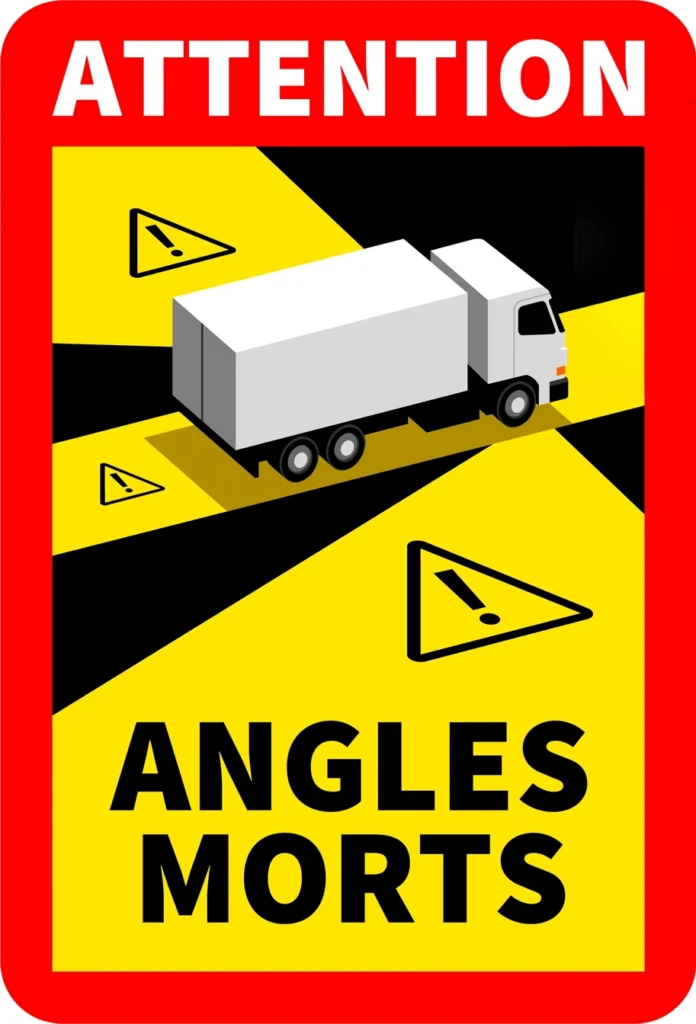
Blind Spot Warning Stickers:
These stickers are placed on the motorhome to alert other road users about the vehicle’s blind spots. They usually depict a warning symbol and may include text such as “Attention: Angles Morts” to indicate blind spots
Speed Limit Sign:
Some countries require motorhomes over a certain weight to display a speed limit sign indicating the maximum speed allowed for that vehicle.
Weight Threshold Rules:
Under 3.5 tonnes: Exempt from the blind spot sticker requirement.
Over 3.5 tonnes: Mandatory display on both sides and the rear of the vehicle when driving in urban/built-up areas.
Ferry or Tunnel Crossings:
Ferry charges for motorhomes can vary based on several factors, including size, weight, length, height, and sometimes even the number of axles. While there isn’t a universal rule that ferries charge less for motorhomes under 3500kg compared to slightly heavier ones, there are some considerations that may affect ferry pricing: